Master the Art of the Homemade French Croissant with This Simple Recipe
There’s something magical about the aroma of a Homemade French Croissant baking in the kitchen — it’s a scent that instantly transports me back to my grandmother’s farmhouse nestled deep in the Blue Ridge Mountains. Mama Lu never made croissants, but she understood the power of baking to bring a family together. Like her skillet cornbread or Sunday pot roasts, the croissant is more than just food; it’s a ritual, a slow, loving process that rewards patience with buttery, flaky layers that melt on your tongue. Making croissants from scratch might seem intimidating, but with a little heart and some elbow grease, you can create those golden crescents that taste like a warm hug from home.
Table of Contents
Why You’ll Love This Homemade French Croissant
Growing up, food was our language of love, and while croissants weren’t part of my childhood table, I’ve come to cherish their delicate complexity as an adult. This Homemade French Croissant recipe is a labor of love — it asks for time, but it rewards you with layers of buttery, flaky goodness that no store-bought version can match. Each fold of the dough is like a page in a story, and the final bake is a chapter filled with golden warmth and crisp edges.
What makes this recipe special is its simplicity in ingredients but depth in technique, much like Mama Lu’s cooking. It calls for no fancy gadgets, just a little patience and respect for the dough. You’ll learn to feel the dough’s rhythm and trust your hands, just as I did kneading biscuit dough beside Mama Lu on a sun-dappled porch. This croissant recipe is a reminder that the best food comes from time, care, and a pinch of soul.
Ingredients You’ll Need for This Homemade French Croissant
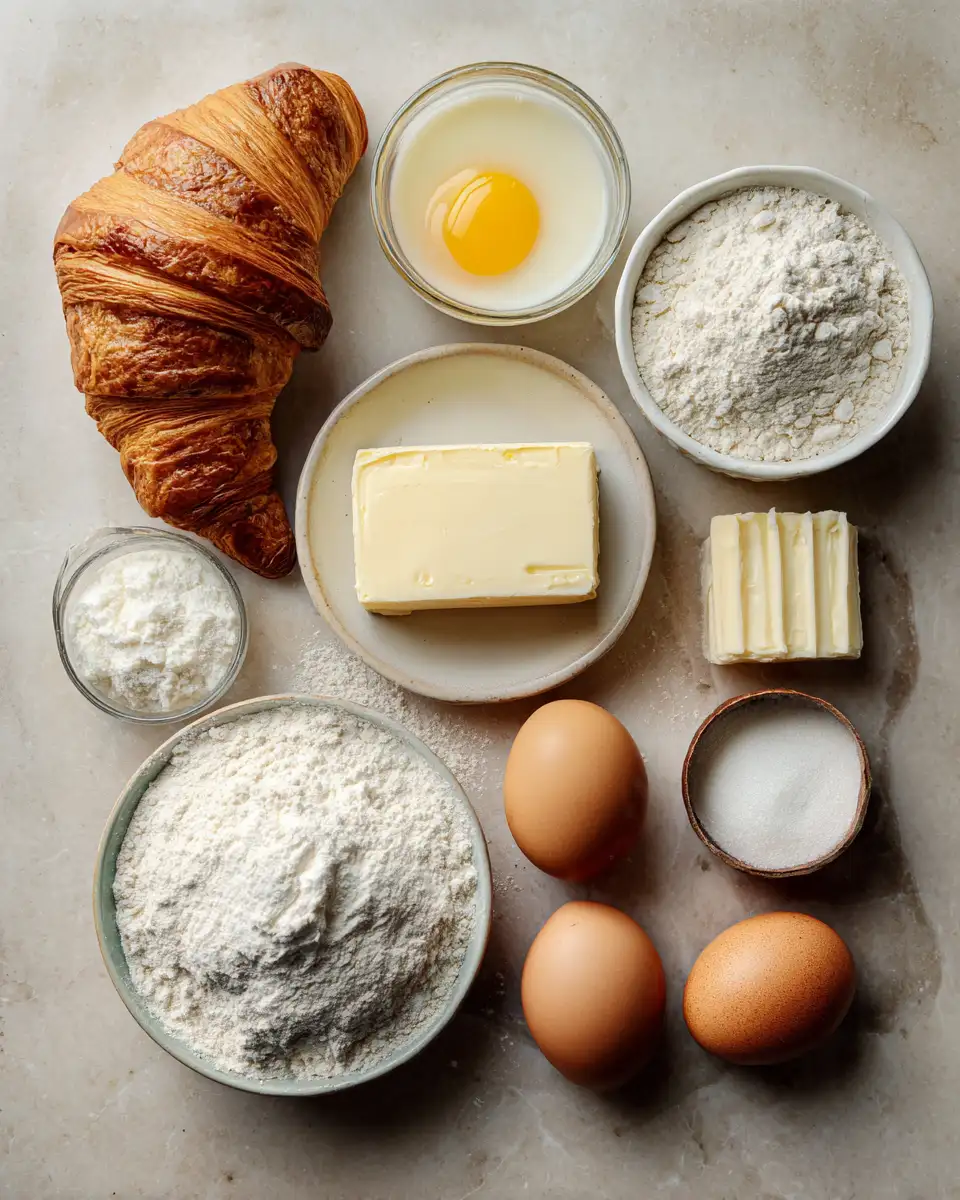
- 4 cups (500g) all-purpose flour, plus extra for dusting (you can substitute with bread flour for a chewier texture)
- 1/2 cup (100g) granulated sugar
- 2 teaspoons salt
- 1 tablespoon active dry yeast
- 1 1/4 cups (300ml) warm whole milk (about 100°F/38°C, you can use buttermilk for a tangier flavor)
- 1 1/4 cups (280g) unsalted butter, cold and cut into slabs for laminating
- 1 large egg (for egg wash)
- Optional: 1 teaspoon vanilla extract for a subtle flavor twist
When I first tried making croissants, I was surprised how just a few humble ingredients could transform into something so elegant. Mama Lu always said, “Good things come from simple things done well,” and that’s exactly the spirit here. The butter is the star, so make sure it’s cold and good quality — I always think of it as the golden treasure hidden inside those layers.
Nutrition Facts
- Calories: Approximately 320 per croissant (based on 8 servings)
- Protein: 6g
- Fat: 18g (mostly from butter)
- Carbohydrates: 35g
- Fiber: 1g
- Sugar: 6g
- Sodium: 220mg
These croissants aren’t diet food, and that’s part of their charm. Growing up, indulgence was about savoring every bite of something made with love, not counting calories. The butter and flour make for a rich treat best enjoyed in moderation, perhaps alongside a cup of strong coffee or a bowl of fresh berries.
PrintMaster the Art of the Homemade French Croissant with This Simple Recipe

Learn how to make delicious Homemade French Croissant. Easy recipe with step-by-step instructions.
- Prep Time: 15 minutes
- Cook Time: 30 minutes
- Total Time: 45 minutes
- Yield: 4 servings 1x
- Category: Main Dish
- Method: Cooking
- Cuisine: International
Ingredients
- 4 cups (500g) all-purpose flour, plus extra for dusting (you can substitute with bread flour for a chewier texture)
- 1/2 cup (100g) granulated sugar
- 2 teaspoons salt
- 1 tablespoon active dry yeast
- 1 1/4 cups (300ml) warm whole milk (about 100°F/38°C, you can use buttermilk for a tangier flavor)
- 1 1/4 cups (280g) unsalted butter, cold and cut into slabs for laminating
- 1 large egg (for egg wash)
- Optional: 1 teaspoon vanilla extract for a subtle flavor twist
When I first tried making croissants, I was surprised how just a few humble ingredients could transform into something so elegant. Mama Lu always said, “Good things come from simple things done well,” and that’s exactly the spirit here. The butter is the star, so make sure it’s cold and good quality — I always think of it as the golden treasure hidden inside those layers.
Instructions
- In a small bowl, dissolve the yeast in warm milk and let it sit for about 5 minutes until foamy — this step wakes up the yeast, much like the morning sun waking the mountain farm.
- In a large mixing bowl, combine the flour, sugar, and salt. Stir to mix evenly.
- Pour the yeast mixture into the dry ingredients and stir until a rough dough forms. Knead by hand on a floured surface for 8-10 minutes until smooth and elastic. This is where patience pays off — I remember countless afternoons kneading dough with Mama Lu, learning that rhythm is everything.
- Shape the dough into a ball, place it in a lightly oiled bowl, cover with a clean towel, and let it rise in a warm spot for 1 to 1.5 hours until doubled in size.
- Meanwhile, prepare the butter block: place the cold butter slabs between two sheets of parchment paper and pound with a rolling pin into a flat rectangle about 8×8 inches. Chill it in the fridge if it softens too much.
- Once the dough has risen, roll it out on a floured surface into a 16×10 inch rectangle. Place the butter block in the center of the dough, folding the dough edges over it like a letter.
- Roll the dough out gently into a 20×10 inch rectangle, then fold it into thirds, like folding a letter again. Wrap in plastic wrap and chill in the fridge for 30 minutes to relax the gluten and keep the butter firm.
- Repeat the rolling and folding process two more times, chilling the dough for 30 minutes between each turn. This lamination process creates the flaky layers that make croissants so special.
- After the final fold and chill, roll the dough out into a 20×10 inch rectangle. Using a sharp knife or pizza cutter, cut the dough into triangles with a base of about 5 inches.
- Starting at the base of each triangle, gently stretch and roll the dough towards the tip to form a crescent shape. Place the rolled croissants on a baking sheet lined with parchment, leaving space to rise.
- Cover loosely with a kitchen towel and let them proof for 1 to 1.5 hours at room temperature until puffy but not doubled.
- Preheat your oven to 400°F (200°C). Beat the egg with a tablespoon of water to make an egg wash. Brush the croissants gently with the egg wash for that golden, glossy finish.
- Bake for 15-20 minutes, rotating the tray halfway, until croissants are puffed and deep golden brown. The smell will fill your kitchen with warmth, just like Mama Lu’s Sunday roasts did on chilly mornings.
- Let cool on a wire rack for 10 minutes before serving to allow the layers to set and the butter to settle.
When I first mastered this process, I felt like I’d tapped into a kind of kitchen magic — a reminder that great things come from slow, steady work. If you ever feel rushed, pause and breathe; croissants don’t like to be hurried.
Steps to Create Your Homemade French Croissant
- In a small bowl, dissolve the yeast in warm milk and let it sit for about 5 minutes until foamy — this step wakes up the yeast, much like the morning sun waking the mountain farm.
- In a large mixing bowl, combine the flour, sugar, and salt. Stir to mix evenly.
- Pour the yeast mixture into the dry ingredients and stir until a rough dough forms. Knead by hand on a floured surface for 8-10 minutes until smooth and elastic. This is where patience pays off — I remember countless afternoons kneading dough with Mama Lu, learning that rhythm is everything.
- Shape the dough into a ball, place it in a lightly oiled bowl, cover with a clean towel, and let it rise in a warm spot for 1 to 1.5 hours until doubled in size.
- Meanwhile, prepare the butter block: place the cold butter slabs between two sheets of parchment paper and pound with a rolling pin into a flat rectangle about 8×8 inches. Chill it in the fridge if it softens too much.
- Once the dough has risen, roll it out on a floured surface into a 16×10 inch rectangle. Place the butter block in the center of the dough, folding the dough edges over it like a letter.
- Roll the dough out gently into a 20×10 inch rectangle, then fold it into thirds, like folding a letter again. Wrap in plastic wrap and chill in the fridge for 30 minutes to relax the gluten and keep the butter firm.
- Repeat the rolling and folding process two more times, chilling the dough for 30 minutes between each turn. This lamination process creates the flaky layers that make croissants so special.
- After the final fold and chill, roll the dough out into a 20×10 inch rectangle. Using a sharp knife or pizza cutter, cut the dough into triangles with a base of about 5 inches.
- Starting at the base of each triangle, gently stretch and roll the dough towards the tip to form a crescent shape. Place the rolled croissants on a baking sheet lined with parchment, leaving space to rise.
- Cover loosely with a kitchen towel and let them proof for 1 to 1.5 hours at room temperature until puffy but not doubled.
- Preheat your oven to 400°F (200°C). Beat the egg with a tablespoon of water to make an egg wash. Brush the croissants gently with the egg wash for that golden, glossy finish.
- Bake for 15-20 minutes, rotating the tray halfway, until croissants are puffed and deep golden brown. The smell will fill your kitchen with warmth, just like Mama Lu’s Sunday roasts did on chilly mornings.
- Let cool on a wire rack for 10 minutes before serving to allow the layers to set and the butter to settle.
When I first mastered this process, I felt like I’d tapped into a kind of kitchen magic — a reminder that great things come from slow, steady work. If you ever feel rushed, pause and breathe; croissants don’t like to be hurried. Learn more: Savory Pancake Tacos Recipe That Will Transform Your Breakfast Game
Tips for Making the Best Homemade French Croissant
- Keep everything cold — especially your butter and dough. This prevents the butter from melting into the dough and helps create those signature flaky layers.
- Don’t rush the proofing stages. Like the slow stories Mama Lu shared on the porch, good things take time to develop flavor and texture.
- Use a sharp knife or pizza cutter to cut your dough cleanly — ragged edges can make rolling difficult and affect the final shape.
- If your kitchen is warm, chill your dough between steps to keep the butter firm.
- Practice makes perfect. My first croissants were a little tough, but each try brought me closer to the buttery, flaky ideal.
- For a little extra flair, sprinkle a bit of coarse sugar on top before baking or add a thin layer of almond paste inside before rolling for a sweet surprise.
Making croissants is as much about the journey as the destination. It’s a chance to slow down, connect with your hands, and honor a tradition that’s been passed down in kitchens far from the Blue Ridge Mountains but with the same spirit of care and love.
Serving Suggestions and Pairings

There’s no wrong way to enjoy a freshly baked croissant, but here are some of my favorite ways that remind me of the simple joys of home:
- Spread with homemade blackberry jam, a nod to the wild berries Mama Lu picked outside our farmhouse.
- Paired with a sharp cheddar and a drizzle of honey for a sweet-savory twist.
- Filled with ham and melted Gruyère for a classic croque monsieur-inspired treat.
- Simply served warm with a pat of butter and a steaming cup of black coffee, perfect for lazy weekend mornings.
- Accompanied by fresh fruit salad or a dollop of crème fraîche for a light, elegant breakfast.
I remember one chilly autumn morning when the whole family gathered around the kitchen table with buttered croissants and hot tea. Those moments — slow, simple, and full of laughter — are what make these croissants worth every fold.
Storage and Reheating Tips
Croissants are best enjoyed fresh, but life being what it is, sometimes you have leftovers — or you want to make them ahead. Here’s how to keep that flaky magic alive:
- Store cooled croissants in an airtight container or wrapped loosely in foil at room temperature for up to 2 days.
- For longer storage, freeze croissants individually wrapped in plastic wrap and placed in a freezer bag for up to 1 month.
- To reheat, preheat your oven to 350°F (175°C). Place croissants on a baking sheet and warm for 5-7 minutes until heated through and crisp again.
- Avoid microwaving — it makes croissants soggy and chewy instead of flaky.
When I bring out frozen croissants I made the week before, I’m reminded of how food connects us across time and place — a little slice of home ready whenever you need it.
Frequently Asked Questions
What are the main ingredients for Homemade French Croissant?
The main ingredients for Homemade French Croissant include the items listed in our ingredients section above. Each ingredient plays a crucial role in achieving the perfect flavor and texture.
How long does it take to make Homemade French Croissant?
The total time to make Homemade French Croissant includes both preparation and cooking time. Check the recipe card above for exact timing details.
Can I make Homemade French Croissant ahead of time?
Yes, Homemade French Croissant can often be prepared in advance. Store it properly in an airtight container in the refrigerator and consume within the recommended timeframe.
What can I serve with Homemade French Croissant?
Homemade French Croissant pairs well with various sides and accompaniments. Consider the serving suggestions mentioned in the recipe for the best dining experience.
Is Homemade French Croissant suitable for special diets?
Depending on the ingredients used, Homemade French Croissant may be adapted for various dietary needs. Check the ingredients list and consider substitutions as needed for your dietary requirements.
Final Thoughts
Making a Homemade French Croissant is like stepping into a tradition that’s both timeless and deeply personal. From my farmhouse roots in the Blue Ridge Mountains to my kitchen here in Portland, I’ve learned that the best recipes are those shared with heart — just like Mama Lu taught me. It’s not about perfection or speed; it’s about patience, care, and the joy of creating something with your own hands.
So if you’re ready to roll up your sleeves, dust off your rolling pin, and fill your kitchen with the scent of buttery layers, this recipe is your invitation. Take your time, trust the process, and know that each flaky bite is a celebration of love, history, and home.